Courage in leadership does not always look dramatic. More often, it looks like a question.
A question that makes the room pause. A question that exposes tension between competing priorities. A question that leaders may quietly be asking themselves, but rarely say out loud.
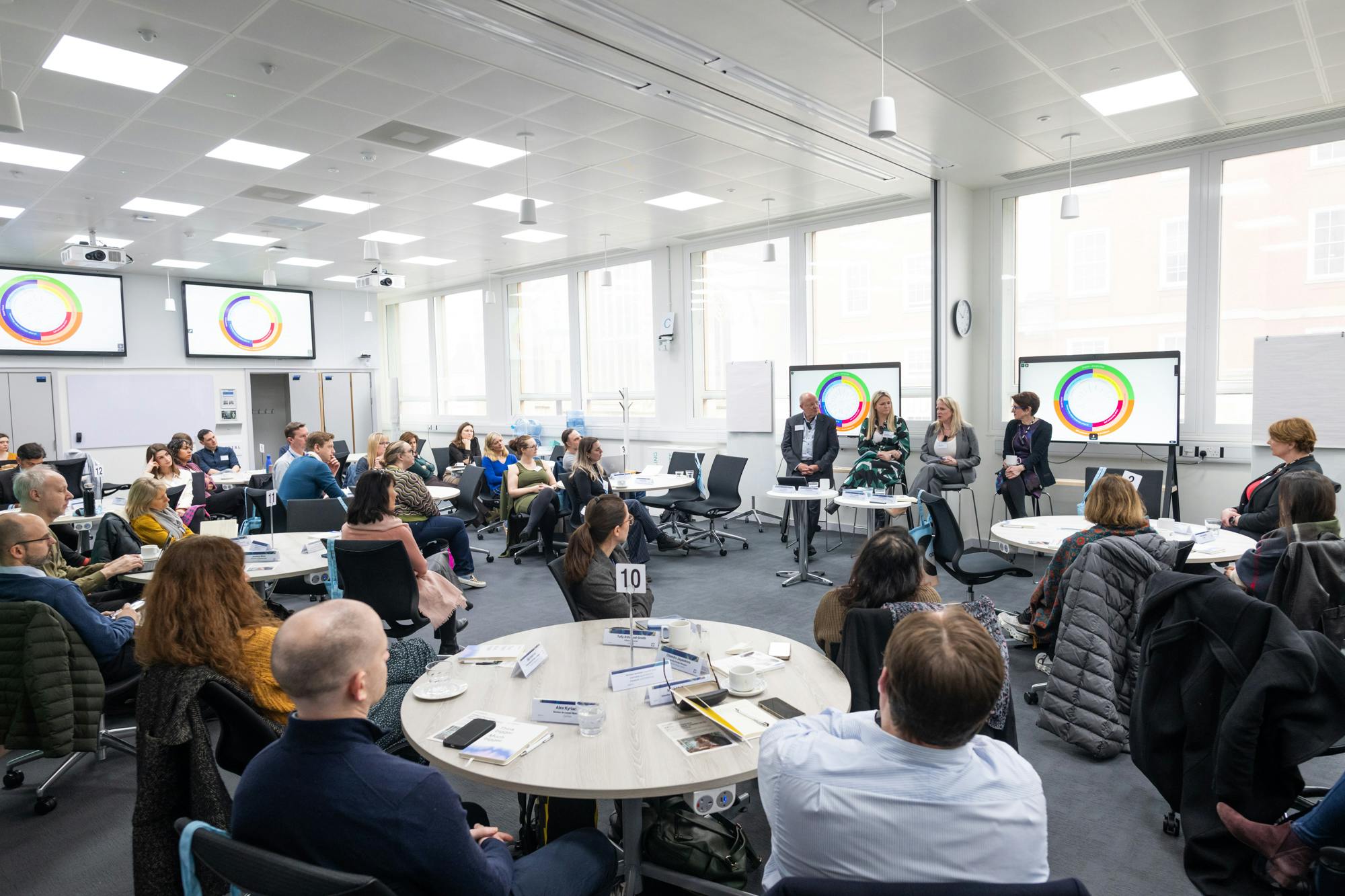
When senior leaders gathered at Imperial College London for Confident Decisions in Complex Times, hosted by Corndel and Imperial Executive Education, the conversation quickly revealed something important. The most valuable moments were not the answers.
They were the questions.
Again and again, the room returned to the same theme. Courage in leadership is often the courage to confront the difficult questions that sit beneath complex decisions.
“When did you realise leadership was hard?”
The first question posed to the room was deceptively simple.
When did you realise leadership was hard?
For one leader, the moment came when they recognised that good decisions are not always popular ones.
“If you’re going to make a decision that benefits the business, not everyone is going to like it,” they said. “As a people pleaser, that has been hard. Not being liked, even when you know it’s for the right reason.”
That sentiment resonated widely. Leadership, many agreed, is often described in terms of influence and inspiration. In reality, it also involves difficult trade-offs and uncomfortable consequences.
Sometimes the courageous choice is simply accepting that not everyone will agree with you.
“How do you lead when you’re not the expert?”
Another question that struck a chord focused on a challenge many senior leaders face as they progress in their careers.
How do you make decisions when you are responsible for the outcome, but not the expert in the room?
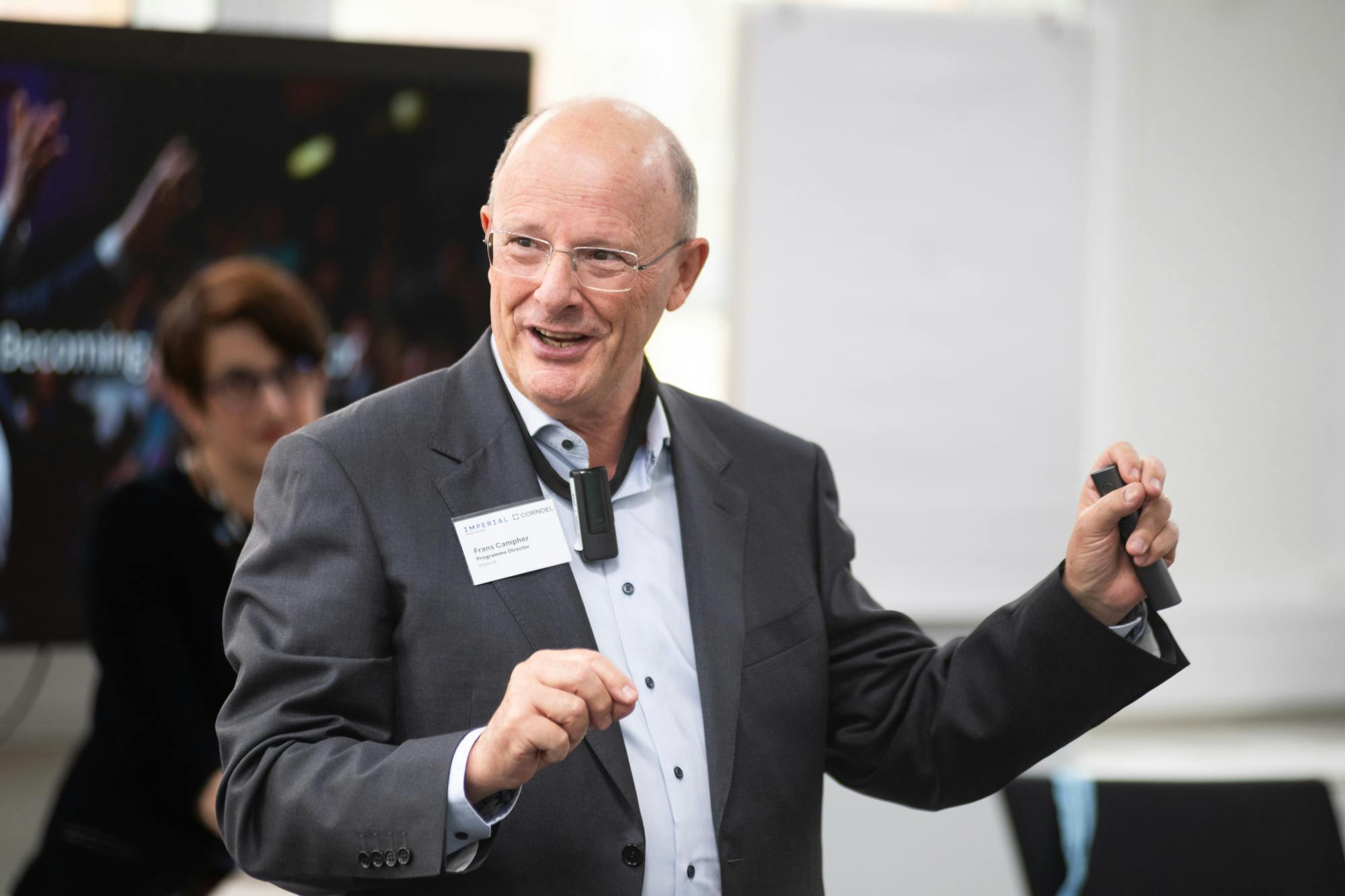
Frans Campher, Programme Director at Imperial Executive Education and executive coach to CEOs and senior leadership teams, described the transition clearly.
Leadership, he explained, involves moving from expert to enabler.
“You move from being the violinist to becoming the conductor. You’re no longer the smartest person in the room. You’re leading the experts.”
That shift requires a different kind of confidence. Leaders must trust their judgement while relying on the expertise of others. They must make decisions while holding uncertainty.
As one participant reflected, that can bring moments of doubt.
“When you’re leading a decision but you’re not the expert, that’s when the self-doubt comes in.”
“You move from being the violinist to becoming the conductor. You’re no longer the smartest person in the room. You’re leading the experts.”
Many of the questions in the room focused on the tension between competing priorities.
Short-term delivery versus long-term impact; commercial pressure versus quality.
Supporting individuals versus making decisions that benefit the wider organisation.
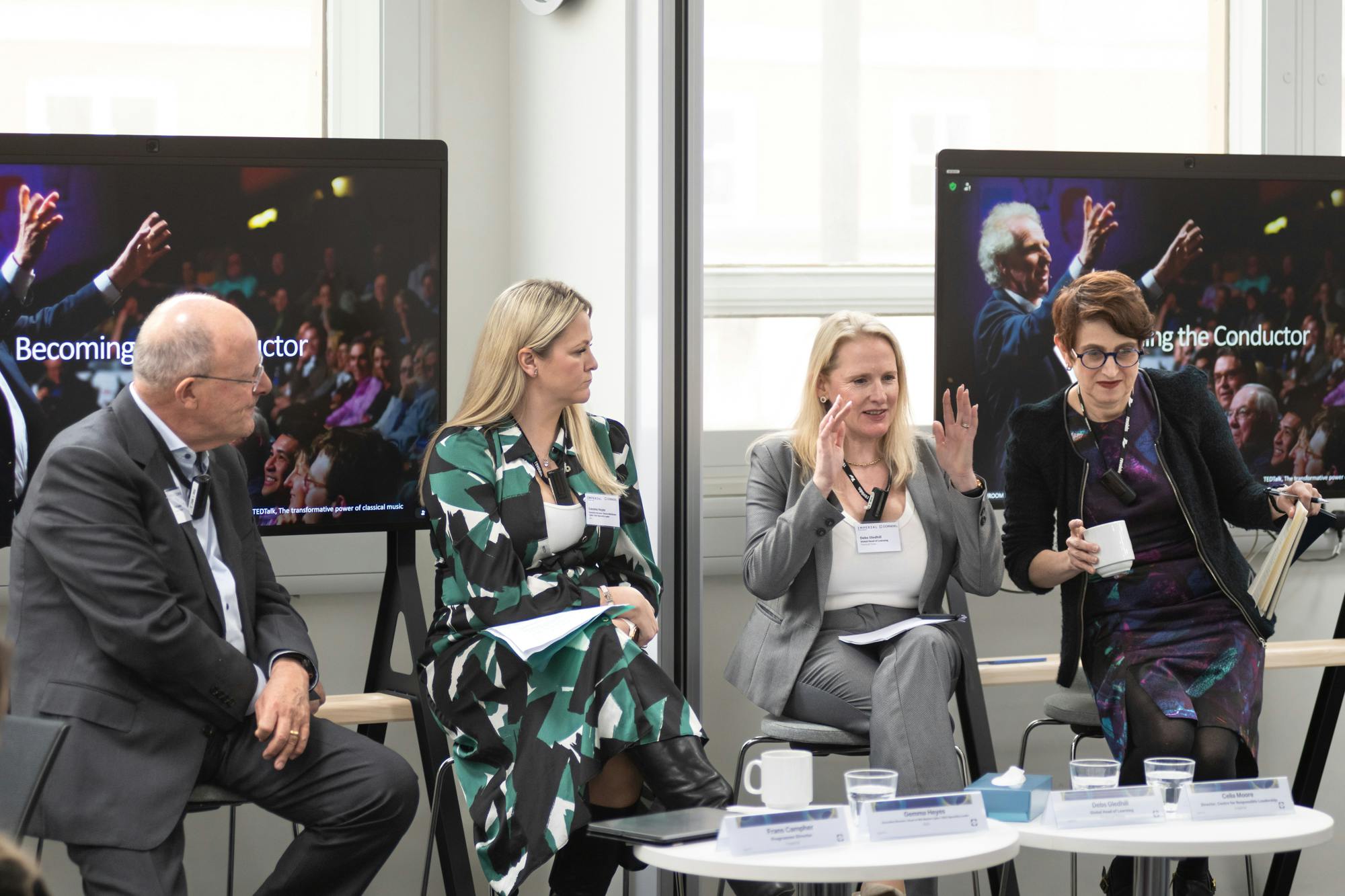
Professor Celia Moore from the Centre for Responsible Leadership at Imperial College London helped explain why those decisions feel so uncomfortable.
“What gives us the knot in our stomach,” she said, “is that we want to value lots of different things at once.”
Leaders want to support their teams. They want to deliver results. They want to act ethically and build sustainable organisations. Often, those priorities pull in different directions.
The challenge is not removing the tension. It is having the courage to acknowledge it and work through it thoughtfully.
“You know it’s the right thing to do,” one leader said. “But it doesn’t mean it’s going to feel great.”
“How do you lead when you disagree with the decision?”
Perhaps the most honest moment in the conversation came when someone asked a question many leaders quietly face.
What happens when you are responsible for delivering a decision you do not agree with?
One participant described the dilemma clearly.
“We’re going through a reorganisation and I’m expected to lead my team through it. But if the ‘why’ isn’t clear to me, how can I lead them with confidence?”
The discussion that followed highlighted the importance of challenge in leadership. Courage does not only mean delivering difficult messages. Sometimes it means questioning them.
For organisations to make better decisions, leaders must feel able to challenge assumptions, ask for clarity and speak truth to power.
“Who is accountable when AI is involved?”
As the conversation turned to artificial intelligence, a new leadership question emerged.
If a decision informed by AI goes wrong, who is accountable?
Professor Moore warned that technology risks creating distance between decision and responsibility.
“People want to be leaders,” she said. “The salary, the standing. But accountability is the real leadership challenge.”
AI can make it easier to diffuse responsibility across systems, teams and processes.
“We’ve moved from ‘the computer said no’ to ‘the computer said so’.”
But the room agreed on one point. Technology cannot replace human judgement. Leaders must still take responsibility for the decisions made within their organisations.
Across all of these questions, a consistent thread emerged.
Modern leadership is less about certainty and more about judgement.
It requires the courage to ask difficult questions, confront uncomfortable trade-offs and take responsibility for decisions that shape organisations and people.
These capabilities are not developed in isolation. They require space for reflection, challenge and learning alongside other experienced leaders.
That is the thinking behind the Executive Development Programme, delivered by Corndel in partnership with Imperial Executive Education.
The programme elevates the impact and influence of senior leadership talent, enhancing their strategic vision, executive presence and ability to drive cultural mindset and organisational transformation.
Through immersive workshops, executive coaching and masterclasses from Imperial experts, leaders develop the strategic thinking, self-awareness and decision-making frameworks needed to lead at the highest organisational levels.
Because in complex times, leadership is not defined by having all the answers.
It is defined by the courage to ask the right questions.